Warhound Secures $200 Million to Create Genetically Engineered Military Canines
The new venture, valued at $1.2 billion, aims to bridge the gap in U.S. working dog supply by pairing Colossal Biosciences' gene editing with Anduril's tactical hardware.
By Thomas Reynolds ·
The U.S. military currently relies heavily on imports for its canine workforce, but a new startup intends to manufacture these assets domestically. On Thursday, Warhound emerged from stealth mode to announce it has raised $200 million in new funding, a round that values the company at $1.2 billion.
The capital injection comes from a group of investors that includes Sequoia, 8VC, Corner Ventures, and In-Q-Tel, a venture firm backed by the CIA and other U.S. intelligence agencies. The company was co-conceived by Ben Lamm of Colossal Biosciences and Palmer Luckey of Anduril, who met approximately a year prior at a conference to discuss the limitations of current working dog breeding practices.
Warhound’s primary mission is to address a critical supply chain issue: more than 80% of the U.S. military’s working dogs are sourced from Europe, and fewer than half of those are deemed fit for service. Many imported dogs fail training due to inherited health issues such as poor eyesight, hip dysplasia, or high cancer risks. By engineering dogs with specific traits for longevity, speed, and enhanced olfactory capabilities, Warhound aims to reduce this dependency on foreign nations and create a more reliable domestic supply.
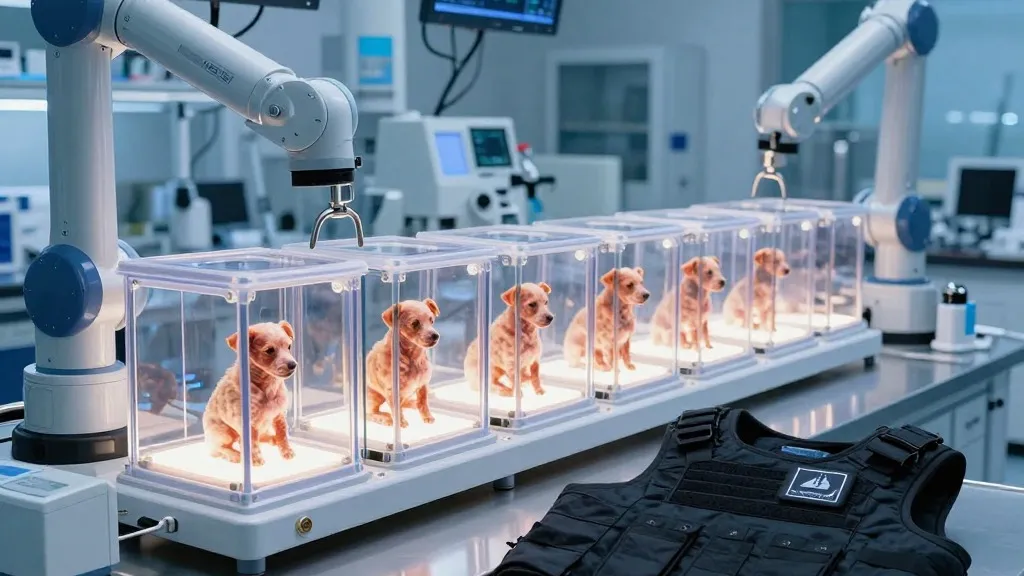
The technical approach involves using Colossal’s biobank of cell lines from top-performing breeds, specifically Belgian Malinois and German Shepherds. The team will edit these genes to remove detrimental traits and insert those that improve performance, creating a new type of dog. Anduril will complement these biological enhancements with hardware and software, such as protective vests equipped with data sensors and goggles for situational awareness. Lamm described the Anduril gear as an enhancement placed on top of the dog, designed to improve both canine and handler safety.
Reactions to the venture have been largely positive regarding ethical oversight. The American Humane Society stated it applauds Warhound and Colossal for inviting the organization to the table, emphasizing its commitment to science and ethics. The company is working under the Society's guidance to certify its training programs and hopes retired dogs will enter the Society’s Military Working Dog Reunification Program to find permanent homes.
Looking ahead, the first batch of dogs is scheduled to be cloned and incubated shortly, with births expected in early 2027. Lamm indicated that these animals could begin service within two years. While pricing has not yet been determined, the company expects to sell to the Department of Defense, police forces, and other first responders. Viagen, another entity owned by Colossal, will handle the cloning process using technology that already boasts a high success rate in endangered species conservation.
Luckey serves as a partner in the venture but holds no equity, while Colossal retains ownership stakes and licenses its technology. Lamm noted that the company has briefed numerous government groups and maintains that each dog will undergo standard military training and management, ensuring civilian safety once the animals enter active service.
Source: TechCrunch