Regulators Mandate Cyan Lighting Standard for Autonomous Vehicles
Federal agencies have proposed a uniform blue-green light requirement to help distinguish driverless cars from traditional human-operated traffic.
By Kateryna Melnyk ·
The long-standing ambiguity surrounding how driverless vehicles communicate their status to the public is approaching a federal resolution. After years of fragmented debates involving flashing text, audio alerts, and proprietary lighting systems, the National Highway Traffic Safety Administration (NHTSA) has moved to standardize the visual language of autonomous driving. The core tension lies in creating a universal signal that is distinct from existing traffic patterns while simultaneously simplifying the regulatory framework for vehicles that increasingly lack human drivers.
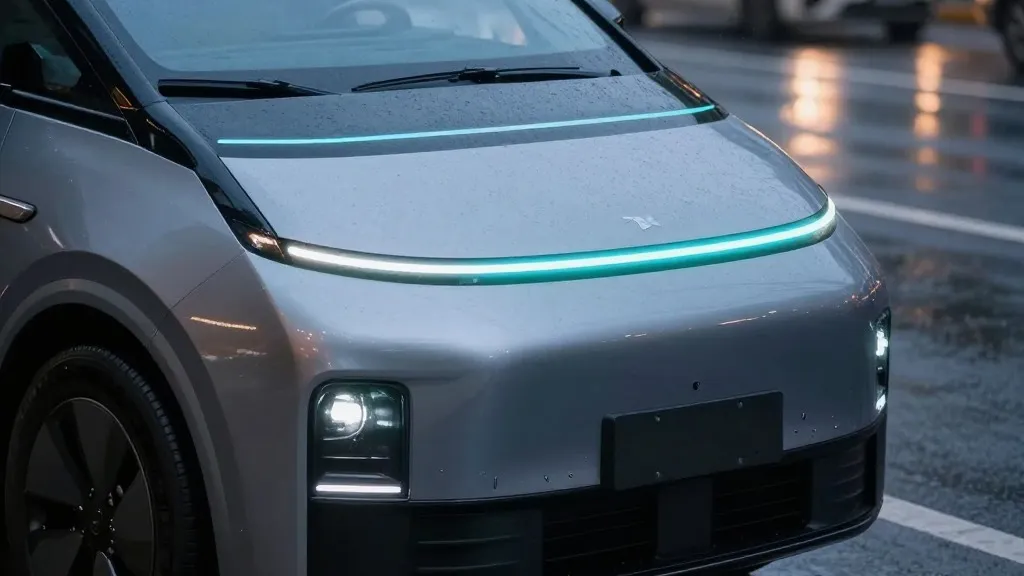
The proposed amendment to Federal Motor Vehicle Safety Standard No. 108 introduces a specific requirement for cyan-colored marker lamps. The agency argues that this blue-green hue fills a critical visual gap in the current automotive color palette. Red, amber, white, and flashing blue or red lights are already established for brake signals, turn indicators, headlights, and emergency vehicles. By selecting cyan, NHTSA aims to provide a clear and consistent indicator to law enforcement and other road users that an automated driving system is currently in control, thereby reducing confusion on shared roads.
While the industry has experimented with various lighting solutions, the federal move seeks to create a uniform national standard. Mercedes-Benz previously received state-level approval for turquoise lights on its Level 3 Drive Pilot models, though the automaker later abandoned that specific approach in favor of a Level 2++ system. By establishing a federal benchmark, NHTSA intends to allow major operators such as Waymo, Nuro, and Zoox, along with manufacturers like GM and Mercedes, to adopt a consistent setup. This standardization ensures that if manufacturers choose to install these lights, they will use a legally defined configuration regarding color, brightness, and location, rather than a disparate mix of private signals.
Beyond the new lighting standards, the proposal seeks to dismantle regulations that are ill-suited for human-free designs. Current rules require physical components such as hazard switches, manual beam shifters, and turn levers, which are unnecessary for vehicles operated entirely by software. NHTSA proposes removing these mandates to reduce administrative burdens. Additionally, the agency plans to update the 12.8-volt testing standard to accommodate modern LED architectures, allowing automakers to design around contemporary technology without navigating outdated compliance hurdles. The proposal also considers eliminating rules that dictate the vertical positioning of high-beam and low-beam lights relative to one another.
This regulatory shift is part of a broader Department of Transportation initiative to streamline the deployment of autonomous vehicles. The overarching goal is to facilitate the production of cars that may eventually lack traditional human controls like steering wheels and pedals. By updating the rules to reflect the reality of automated driving, the government aims to lower the barriers to entry for new vehicle designs. However, the transition is not without friction, as regulators continue to enforce existing standards until the new rules are fully finalized and implemented.
The urgency of this standardization is highlighted by recent enforcement actions against current autonomous models. Last month, NHTSA initiated an audit query into the Tesla Cybercab to examine the technical data and certification process used by the manufacturer. The investigation focuses on the absence of design features such as sideview mirrors, pedals, and steering wheels, which are currently required under FMVSS. This tension between innovation and existing regulatory frameworks underscores why a clear, standardized approach to both physical controls and visual signals is essential for the future of autonomous transportation.
Source: The Verge