Tesla Reverses Course to Build Proprietary Maps for Autonomy
The automaker admits its current system struggles with basic road rules, prompting a shift from vision-only models to a fleet-generated mapping architecture.
By Aiko Yamamoto ·
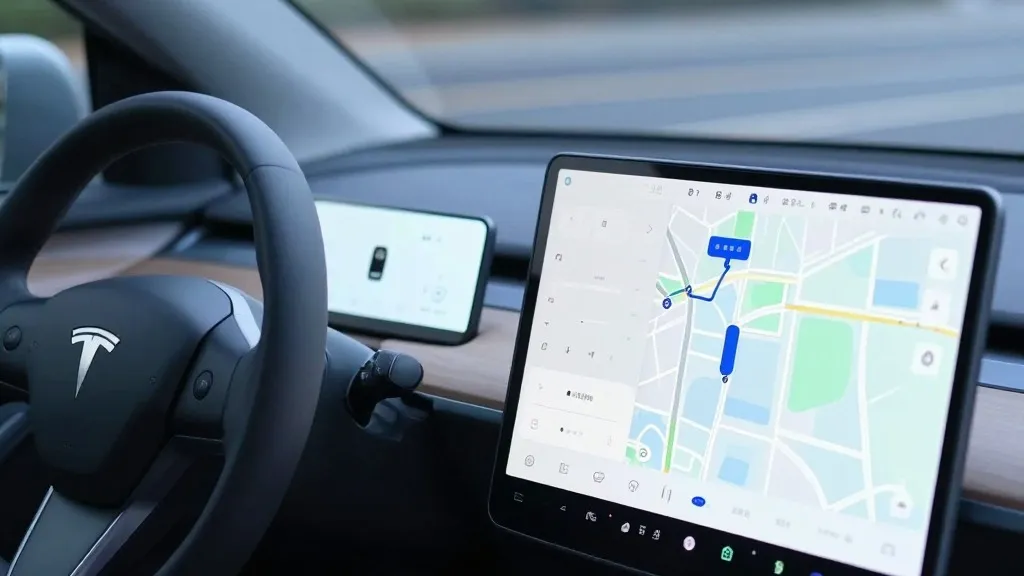
Drivers using Tesla’s Full Self-Driving software will soon encounter a more structured approach to navigation, as the company confirms it is developing its own map layer to address persistent errors in route selection and speed compliance. This development signals a significant strategic pivot for the automaker, moving away from a pure vision-based model toward a hybrid system that relies on aggregated fleet data to define the driving environment. For consumers, this change implies a potential improvement in the reliability of daily driving tasks, particularly in complex urban scenarios where the current software frequently misinterprets traffic signage.
The first major shift involves a direct admission that third-party navigation data is insufficient for the company’s autonomy goals. Ashok Elluswamy, Tesla’s VP of AI, stated on the Q3 2026 earnings call that the company should not depend on external maps. He explained that a new AI-based architecture is being built to handle the beginning and end of trips, starting with FSD v15. This initial phase will focus on parking and destination handling, with broader navigation capabilities expected to follow over the coming months. The system is designed to learn individual driver preferences and respond to voice commands, creating a personalized mapping experience that evolves with each drive.
The second key development is the correction of specific, high-frequency errors that have plagued the current system. Shareholders and analysts have long noted that speed limit recognition, parking maneuvers, and route choice remain the primary pain points for FSD users. By building an internal map, Tesla aims to provide the system with ground-truth data about the environment, reducing the reliance on real-time visual processing for static information. This is particularly critical given recent findings by a Belgian road safety group, which reported that FSD vehicles exceeded speed limits in 55% of tested 30 km/h zones in Brussels. The average speed recorded was 44 km/h, often because the vehicle’s display incorrectly showed a 50 km/h limit, highlighting a fundamental gap in the current vision-only approach.
The third aspect of this strategy aligns Tesla’s operational model more closely with its competitors in the robotaxi space. While Tesla’s CEO previously dismissed high-precision maps as a "brittle" and "fool’s errand" approach, the company is now adopting a similar methodology to Waymo, which uses sensor-equipped fleets to map cities before launching services. Tesla’s new system will use data collected from its millions of customer vehicles to create a continuously updated map layer. This approach supports the current reality of Tesla’s Robotaxi service, which operates within small, geofenced service areas. Although Tesla is not yet using centimeter-level HD maps, the trajectory suggests that the maps will become increasingly detailed as the fleet grows, potentially converging with the high-precision standards previously mocked by leadership.
Contextually, this move represents a departure from the narrative established during the 2019 Autonomy Day event, where Elon Musk argued that lidar and detailed maps were unnecessary crutches for self-driving cars. At that time, Tesla positioned its camera-based AI as a general solution capable of driving anywhere without pre-mapped infrastructure. However, the challenges faced in the last few years, including the NHTSA’s investigation into robotaxi speeding in school zones, have underscored the limitations of relying solely on end-to-end vision. The new mapping architecture is not a contradiction in itself, as Tesla has always used navigation data, but building it in-house rather than licensing it represents a deeper integration of environmental understanding into the driving stack.
Looking ahead, the implementation of this map layer is expected to refine the unsupervised FSD experience, which has been targeted for consumer rollout in Q2 2027. The company argues that a map built from millions of vehicles provides a competitive advantage, allowing the system to anticipate environmental conditions more reliably than a generic navigation app. While critics point out that this brings Tesla closer to the methods it once disparaged, the business logic is sound: if a better map reduces errors in reading basic road signs and managing parking, the overall safety and efficiency of the fleet improve. The shift suggests that the industry is converging on a consensus that while vision is powerful, it requires a robust, proprietary data layer to function effectively at scale.
The financial implications of this strategy are tied to Tesla’s ability to leverage its existing fleet as a data collection tool. By using the cars already on the road to feed the new mapping architecture, Tesla can amortize the development costs across a massive user base, potentially creating a more accurate and responsive navigation system than competitors who must map cities from scratch. This approach also supports the expansion of the Robotaxi service, which requires precise knowledge of service areas to operate safely without drivers. As the map layer matures, it may also influence how Tesla handles regulatory requirements, providing a clear record of the environmental data used to make driving decisions.
In summary, Tesla’s decision to build its own maps marks a pragmatic adjustment to its long-term autonomy strategy. It acknowledges that the current vision system requires additional structural support to handle the nuances of real-world driving, from speed limits to parking lots. This move does not necessarily invalidate the earlier vision-only philosophy but rather refines it, adding a layer of environmental intelligence that was previously considered optional. For the market, this signals that the race to autonomous driving is increasingly about data infrastructure, with the size and diversity of the vehicle fleet becoming a key determinant of map quality and system reliability.
Source: Electrek