SpaceX rejects three US military contracts as Spain’s Miura 5 nears final assembly
A major shift in government procurement sees the private sector decline federal work, while European rocket development accelerates toward its first orbital attempt.
By Jonathan Pierce ·
For individuals tracking the private space industry, the landscape shifted significantly this week with two distinct developments. On one hand, the dominant player in the sector, SpaceX, has formally declined three launch opportunities from the US Space Force. On the other hand, a smaller European competitor is moving its hardware into final assembly stages, signaling that the next generation of small-lift vehicles is becoming a tangible reality rather than a distant concept. These moves highlight a growing divergence between the massive scale of American commercial giants and the targeted, niche efforts of emerging international firms.
The decision by SpaceX to pass on the military contracts marks a notable moment in the relationship between the private sector and government procurement. While the specific financial figures of the declined deals were not itemized in the initial reports, the rejection of three separate contracts indicates a strategic choice rather than a single oversight. This occurs alongside new technical constraints regarding the company’s flagship heavy-lift vehicle. A NASA safety panel recently indicated that the Starship rocket may require up to 22 separate refueling events in space to successfully support a lunar landing. This high number of in-orbit transfers adds a layer of complexity to the mission profile, requiring precise coordination between multiple spacecraft.
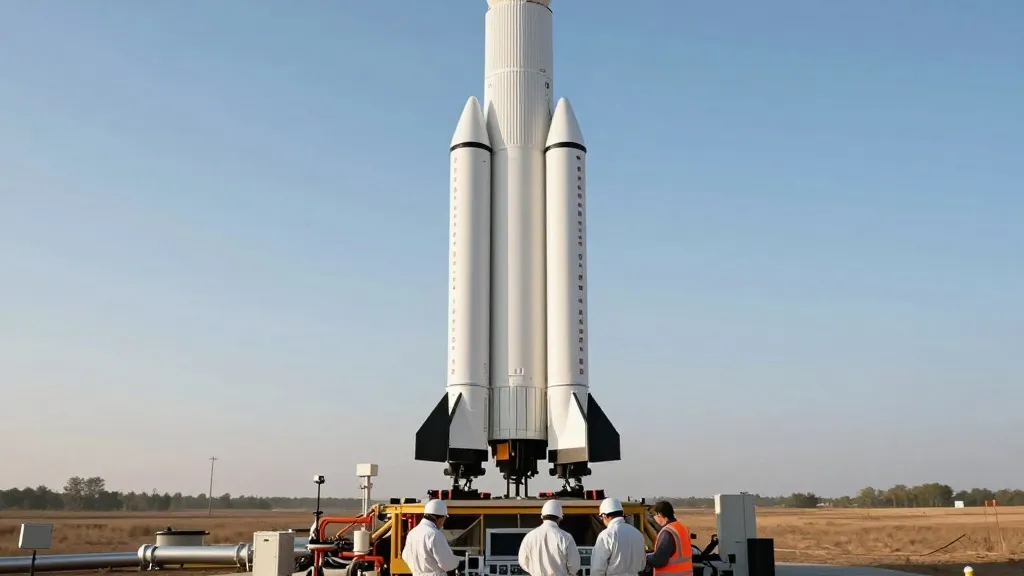
While US headlines dominated the discussion, significant progress is being made in Spain. PLD Space, a company based in Teruel, has confirmed that its Miura 5 rocket is nearing the final stages of integration. The vehicle is scheduled for its inaugural flight before mid-2027. This timeline is ambitious for a new small-lift vehicle, but it is supported by the fact that the company has already manufactured three units of the rocket. The existence of these three vehicles allows the engineering teams to run parallel workflows, applying lessons learned from qualification tests on one unit directly to the assembly of the flight-ready vehicle.
Raúl Torres, the CEO of PLD Space, explained this production strategy in a program update released on October 19. He noted that manufacturing the trio of rockets enabled continuous work across different production phases. Specifically, one Miura 5 second stage is now fully integrated and has begun system-level testing. This stage is currently at the company’s test facility in Teruel, where it is undergoing a rigorous qualification campaign. The process includes a wet dress rehearsal and a static hot-fire test, which are critical steps to ensure the engine and fuel systems perform under realistic operating conditions before the actual launch.
Across the Atlantic, another launch startup is preparing to scale up its operations. Reaction Dynamics, a Canadian company, has announced its intention to raise $350 million in new funding. The company is currently developing the Aurora rocket, a small-lift vehicle targeted for its first orbital attempt in 2028. The capital raise is primarily intended to support rapid expansion of the workforce. Reaction Dynamics currently employs 68 people but aims to grow its staff to more than 350 individuals. This headcount increase is necessary to manage the complex engineering and manufacturing tasks required to bring a new rocket to orbit within four years.
The financial push by Reaction Dynamics also signals its long-term ambitions beyond the initial small-lift vehicle. The company has outlined plans to develop a medium-lift rocket named Borealis, which is targeted for a debut by 2031. This dual-track approach, focusing on both immediate small-lift capabilities and future medium-lift capacity, mirrors the strategies of other prominent launch startups. By securing funding now, the company aims to establish the infrastructure and talent base needed to execute both projects sequentially.
The convergence of these events illustrates the broadening scope of the global launch market. It is no longer dominated solely by a few US-based giants. Instead, a mix of established players refining their heavy-lift capabilities and emerging companies from Europe and Canada are pushing their own vehicles toward flight. For the industry, this means a more competitive environment where specific technical challenges, such as the 22-refueling requirement for Starship, are being addressed while new vehicles like the Miura 5 and Aurora are moving from design to physical test.
The stakes for these companies are high. For SpaceX, declining military work may free up capacity for commercial customers, but the technical hurdles of Starship remain a critical focus for its long-term goals. For PLD Space, the next few months are crucial; the success of the wet dress rehearsal and static test will determine if the mid-2027 target is realistic. For Reaction Dynamics, the ability to close the $350 million raise will dictate whether it can hire the necessary engineers to meet its 2028 deadline. Each of these milestones represents a step in the ongoing expansion of space access.
As the industry moves forward, the interplay between these different segments of the market will become increasingly visible. The rejection of government contracts by a major player, combined with the steady progress of smaller international vehicles, suggests a maturing market. Ordinary observers and investors alike will be watching to see if the Miura 5 meets its integration milestones and if the new funding for Reaction Dynamics translates into tangible progress on the Aurora rocket. The next few quarters will provide clear indicators of how these companies navigate the current landscape.
Source: Ars Technica